
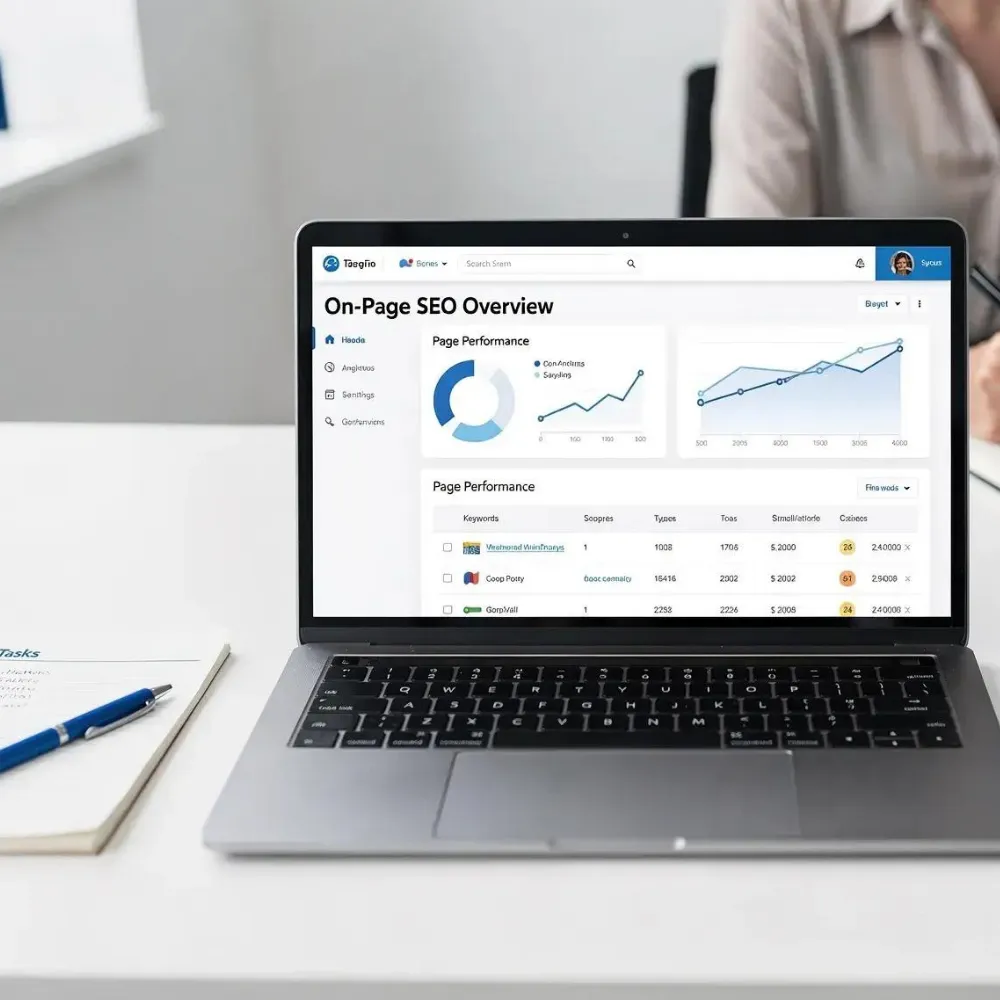
Your website may look professional, but is it attracting the right customers from Google? A visually appealing website alone cannot guarantee online visibility. Your pages also need useful content, relevant keywords, clear headings, descriptive titles, and a structure that helps visitors find the information they need.
This is where on-page SEO services in Pakistan become valuable for businesses that want to improve their online presence. On-page SEO focuses on optimizing individual website pages so search engines can understand their content and users can navigate them more easily.
Whether you run a small business, an online store, a clothing brand, a restaurant, or a growing company, properly optimized pages can support your long-term search visibility.
In this guide, we will explain what on-page SEO includes, how the optimization process works, which elements matter most, and how to choose the right SEO provider for your business.
What Is On-Page SEO?
On-page SEO is the process of improving individual website pages to make their content more relevant, organized, and understandable for search engines and visitors.
It involves optimizing different elements, including:
- Page titles and meta descriptions.
- Keywords and search intent.
- Headings and website content.
- URL structure.
- Internal links.
- Images and alternative text.
- Page readability and usability.
- Relevant structured data.
The objective is to help search engines understand what each page offers while giving visitors useful information that matches their needs.
For example, imagine you own a clothing business in Pakistan. You sell women’s lawn suits through an online store. When someone searches for women’s lawn suits online, you want your relevant product or category pages to have useful information and clear optimization that matches that search.
On-page SEO helps you improve those pages rather than relying only on your homepage to attract visitors.
How On-Page SEO Works
Every website page communicates information through its text, headings, images, links, and HTML elements.
Search engines use these signals and other information to understand a page’s subject and relevance.
A properly optimized page should have:
- A clear purpose and target audience.
- Relevant keywords based on search intent.
- An informative page title.
- A logical heading structure.
- Helpful and original content.
- Relevant internal links.
- Descriptive image information.
- A user-friendly layout.
Why On-Page SEO Matters for Business Websites
Imagine a customer searching for a service your company provides.
They find several websites, but your page has an unclear title, limited information, and confusing headings. Even if your business offers an excellent service, visitors may struggle to understand whether your page answers their needs.
On-page optimization addresses these issues by improving the way your website communicates its value.
It is not simply about placing keywords throughout your content. It is about making every important page relevant, informative, and easy to use.
What Do On-Page SEO Services Include?
Professional on-page SEO services involve reviewing and improving different elements of your website pages.
The exact scope depends on your website, business objectives, competition, and the number of pages that require optimization.
Here are the main components.
Keyword Research and Search Intent
Keyword research identifies the words and phrases potential customers use when searching for products, services, and information.
However, selecting keywords is only the beginning. You also need to understand what the searcher expects to find.
For example:
| Search query | Likely intent |
|---|---|
| What is website SEO? | Informational |
| Best SEO agency in Pakistan | Commercial investigation |
| Hire SEO expert in Karachi | Transactional |
| Digi Ziva contact | Navigational |
A professional SEO strategy maps relevant keywords to appropriate pages.
For example, a clothing store might target:
- Women’s clothing online.
- Buy lawn suits in Pakistan.
- Ladies’ dresses online.
- Summer clothing collections.
Each keyword should connect to a relevant category, product, or informational page.
This prevents businesses from targeting unrelated searches simply because a keyword seems popular.
SEO Title Tags and Meta Descriptions
The title tag and meta description help communicate what a page contains.
The SEO title appears as an important potential headline in Google search results. A clear and relevant title helps users decide whether the result matches their needs.
A meta description summarizes the page and may appear beneath the title in search results. Google can also generate snippets directly from page content, so a meta description is not guaranteed to be displayed. Google for Developers+1
Example of a weak title:
Home | Online Store
Improved title:
Women’s Lawn Suits in Pakistan | Ziva Clothing
Example meta description:
Explore stylish women’s lawn suits in Pakistan. Discover beautiful designs, new collections, and comfortable clothing for everyday wear.
A good SEO title should be specific, readable, and relevant to the actual page.
Heading Structure and Content Optimization
Headings organize your website content into meaningful sections.
A logical heading structure also makes pages easier for visitors to scan.
Common heading elements include:
- H1: Main page heading.
- H2: Main content sections.
- H3: Supporting subsections.
For example, a website offering digital marketing services could use:
H1: Digital Marketing Services for Growing Businesses
H2: Our Digital Marketing Solutions
H3: Social Media Management
H3: Search Engine Optimization
H3: Website Design and Development
Your content should answer the questions visitors are likely to ask.
Avoid writing paragraphs simply to repeat keywords. Explain your services, provide useful details, address customer concerns, and make the next step clear.
URL Structure and Optimization
A URL should be short, descriptive, and easy to understand.
Compare these examples:
Poor URL:
example.com/page?id=12345
Better URL:
example.com/on-page-seo-services/
Descriptive URLs help visitors understand the page topic before opening it.
When creating new pages, use meaningful words and keep the URL structure consistent across your website.
Internal Linking
Internal links connect one page of your website to another.
They help visitors discover related information and support the understanding of your website’s structure.
For example, a blog about on-page SEO could link to:
- Your SEO services page.
- Your website design and development page.
- Your SEO content writing page.
- A related article about technical SEO.
Use descriptive anchor text rather than generic phrases such as “Click Here.”
A link labelled “professional website development services” tells visitors more about the destination than a generic button label.
Google also recommends crawlable links and descriptive link text to help people and search engines understand your pages.
Image Optimization and Alt Text
Images make website content more attractive and help explain products, services, and ideas.
However, images also need appropriate optimization.
Important image SEO practices include:
- Use descriptive image filenames.
- Write meaningful alt text.
- Compress images without unnecessarily reducing quality.
- Choose suitable image dimensions.
- Use relevant images near related content.
- Avoid excessively large image files.
For example:
Poor image filename:
IMG_1234.jpg
Better image filename:
digital-marketing-services-pakistan.jpg
Poor alt text:
SEO SEO services best SEO Pakistan digital marketing
Better alt text:
Digital marketing team reviewing website SEO performance
Alt text should accurately describe the image, not function as a list of keyword
Mobile Usability and Page Experience
Many customers discover businesses using smartphones.
If your website is difficult to navigate on a mobile device, visitors may struggle to read information, view products, or contact your business.
Check that:
- Text is readable without zooming.
- Buttons are easy to tap.
- Images fit different screen sizes.
- Navigation menus work properly.
- Important information is easy to find.
- Pages load and respond smoothly.
Google uses the mobile version of website content for indexing and recommends mobile-friendly website experiences. Google for Developers+1
Page experience is broader than a single speed score. It includes usability, security, mobile presentation, and other aspects that help visitors interact with your website.
Structured Data and Schema Markup
Structured data is a standardized way to describe website information so search engines can better understand the content.
Depending on your website, relevant schema types may include:
- Organization.
- Article or BlogPosting.
- Product.
- LocalBusiness.
- BreadcrumbList.
For example, a business website may use Organization structured data to describe its brand, website, logo, and verified contact details.
An article may use Article or BlogPosting structured data to describe its headline, author, publication date, and images.
Structured data helps search engines interpret page information, but it does not guarantee rich search results or higher rankings.
Benefits of On-Page SEO for Pakistani Businesses
On-page SEO can support business growth by making website pages more relevant, useful, and accessible to potential customers.
Better Search Relevance
Optimized pages communicate their subject more clearly.
When page content matches a user’s search intent, search engines have better information to understand the page.
More Relevant Organic Visitors
A business should not focus only on attracting more visitors. It should attract people who are genuinely interested in its products or services.
Relevant keyword targeting and helpful content can support that objective.
Improved User Experience
Clear headings, useful information, descriptive links, and readable content make it easier for customers to navigate a website.
A better experience helps visitors understand what a business offers.
Stronger Website Content
Content optimization identifies missing information, unclear explanations, and opportunities to answer customer questions.
This can make service pages, product pages, and blog articles more useful.
More Opportunities to Generate Leads
A well-optimized service page can guide visitors towards meaningful actions, such as:
- Requesting a quotation.
- Calling your business.
- Sending a WhatsApp inquiry.
- Booking a consultation.
- Purchasing a product.
- Completing a contact form.
SEO and conversion optimization should work together. Attracting visitors is useful, but helping the right visitors take action is equally important.
Conclusion: Make Every Website Page More Valuable
Your website should do more than simply look attractive. It should communicate your business clearly, provide useful information, and help potential customers discover the products and services you offer.
Well-planned on-page SEO improves the way your pages present information through relevant keywords, meaningful headings, descriptive titles, optimized content, internal links, and other important elements.
For Pakistani businesses, a consistent optimization strategy can support long-term search visibility and create more opportunities to connect with relevant customers.
At Digi Ziva, our aim is to help businesses strengthen their digital presence through website development, SEO, content, branding, and digital marketing solutions.
Ready to improve your website’s SEO? Visit Digi Ziva and get in touch to discuss your website and business goals.